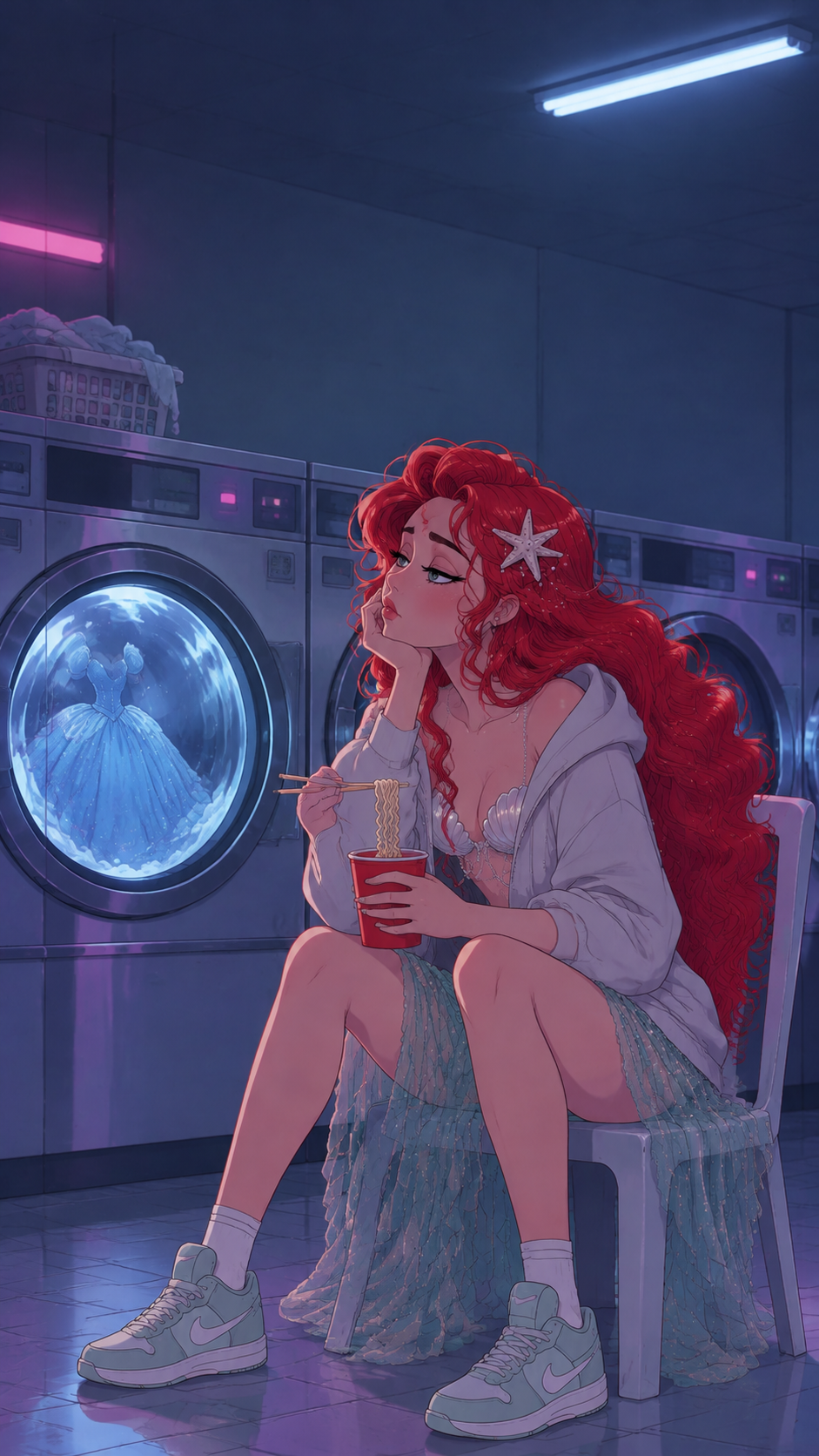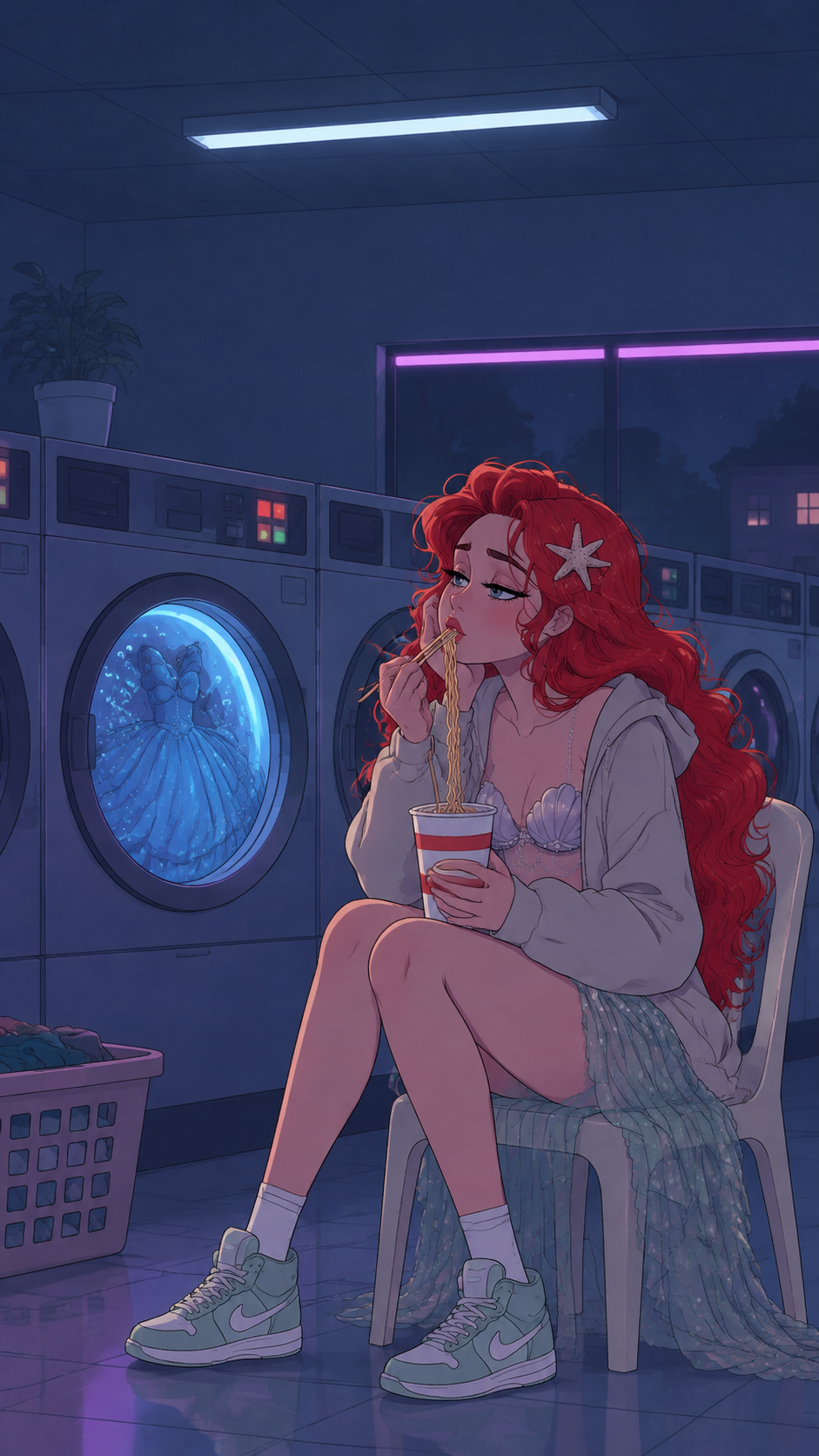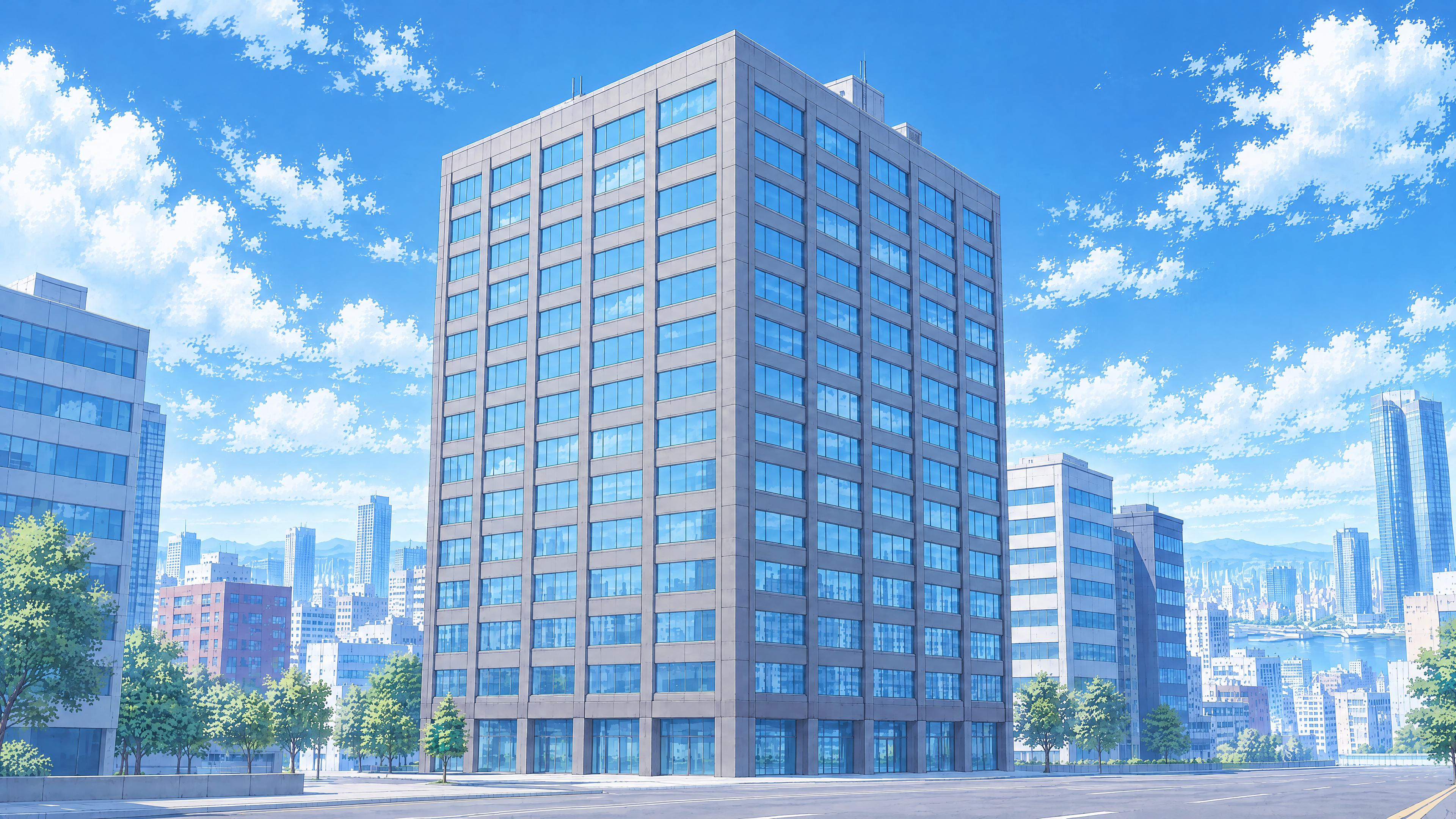
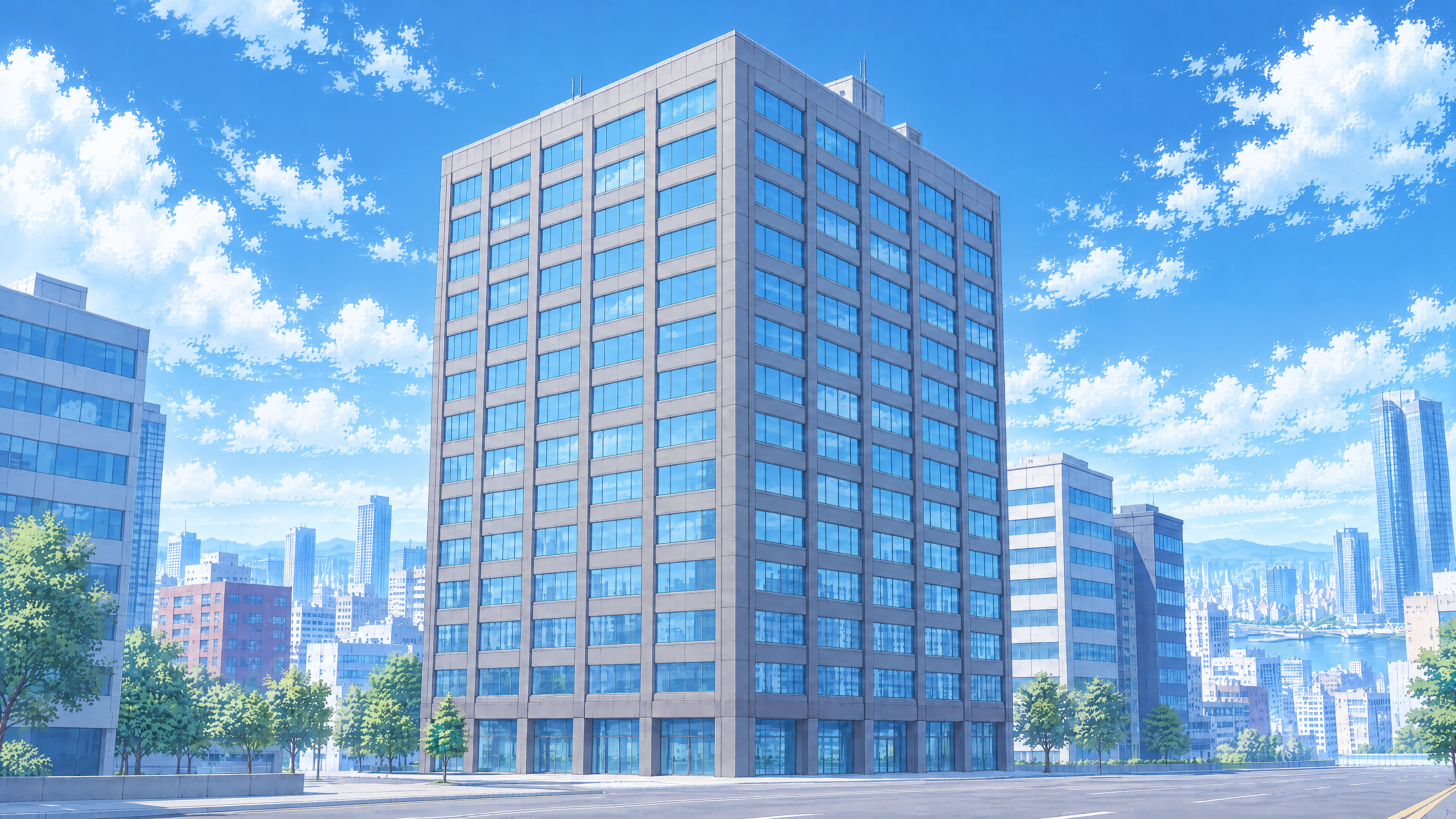
Image - 2026-11-21 20:07
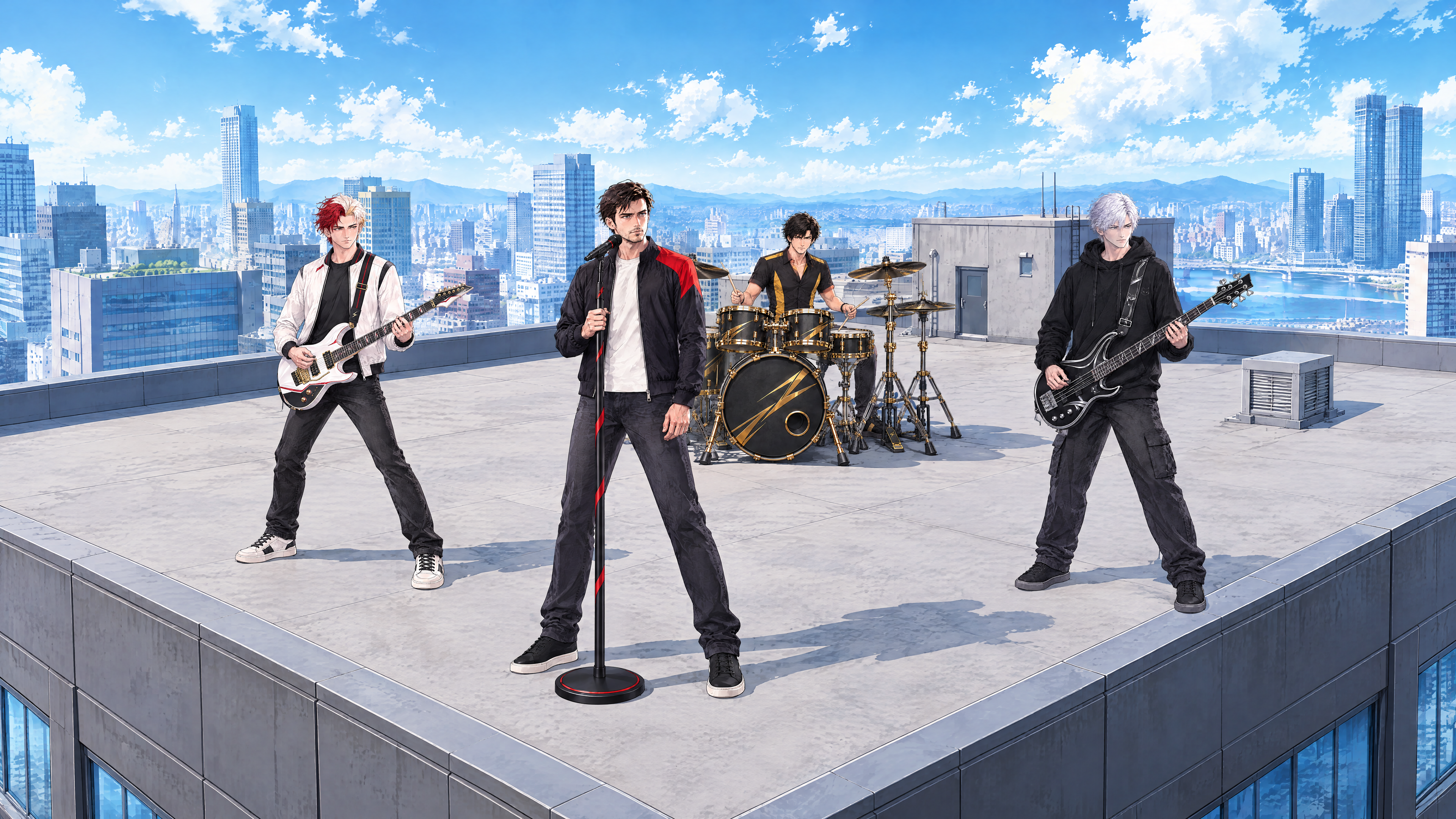
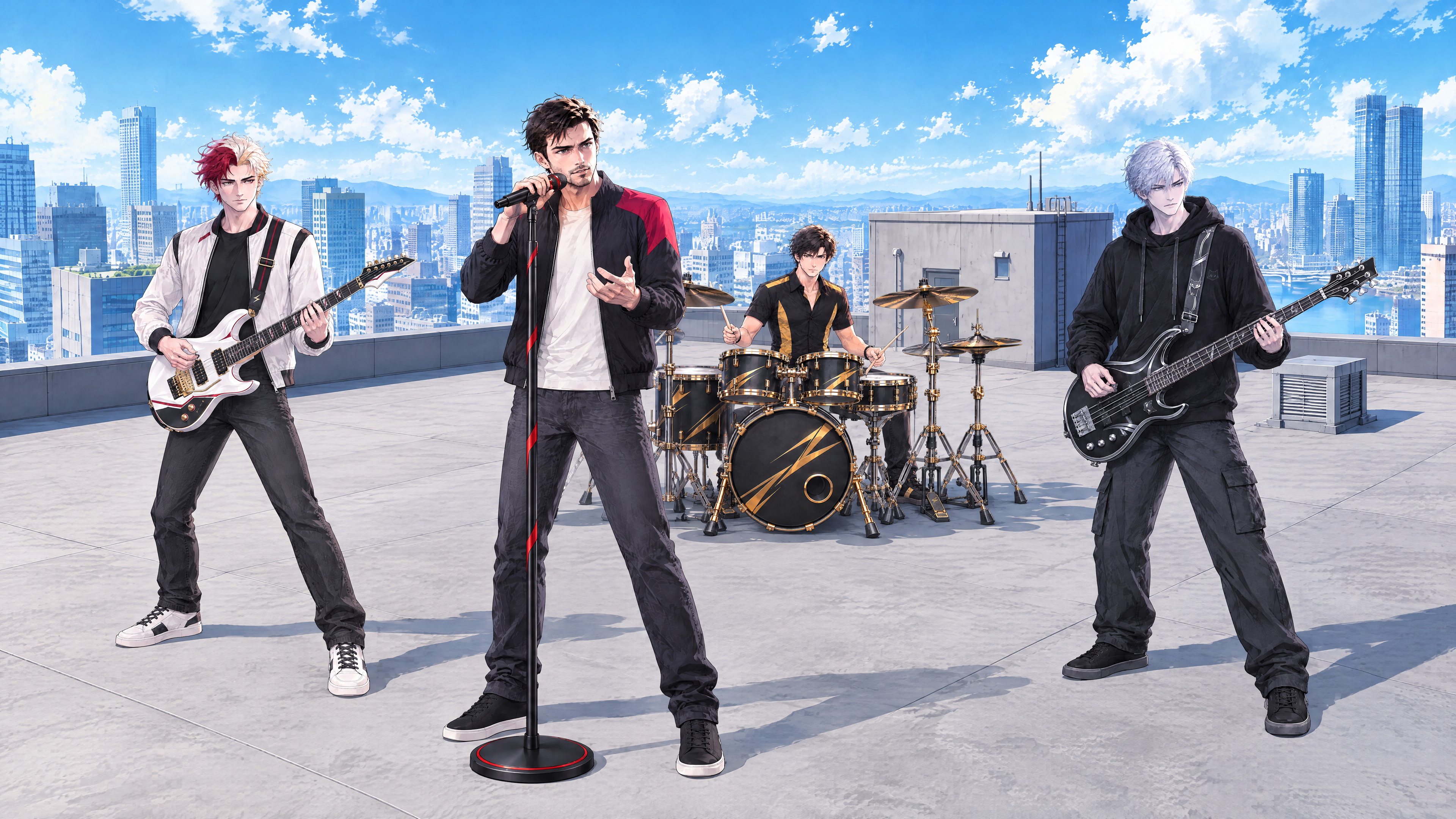
MAIN OBJECTIVE Edit Референс 1 to transform its overly photorealistic architectural appearance into the EXACT cinematic semi-realistic anime illustration style established by Референс 2 and Референс 3. The edited image must look like an authentic exterior shot from the same animated film environment as the approved WH51 rooftop references. This is a CONTROLLED ARTISTIC STYLE CORRECTION, not a new architectural design. Keep the existing exterior camera composition, recognizable multi-story building, overall building proportions, primary facade structure, and repeating window layout from Референс 1. Completely replace the current photographic / architectural CGI rendering treatment with the hand-crafted, cinematic, semi-realistic anime visual language of Референс 2 and Референс 3. The finished image should feel as if the approved WH51 rooftop and the exterior building were illustrated by the SAME ARTIST for the SAME SCENE in the SAME ANIMATED MUSIC VIDEO. REFERENCE ASSIGNMENTS Референс 1 — IMAGE TO EDIT / EXTERIOR BUILDING COMPOSITION Use this image as the base for editing. Preserve: - The main building's position within the frame. - The original street-level upward-looking camera perspective. - The visible building height. - The overall building silhouette. - The main facade divisions. - The existing window rows and columns. - The basic rectangular window proportions. - The visible building corners. - The overall relationship between the building and surrounding urban environment. - The unobstructed view of the building's exterior. - The horizontal 16:9 composition. Do not reconstruct the image as a completely different building. However, do NOT preserve its photographic materials, excessive CGI sharpness, dark architectural rendering, desaturated colors, or overly realistic visual treatment. Those aspects must be corrected. Референс 2 — PRIMARY APPROVED WH51 ART STYLE MASTER This image is the MAIN authority for the visual appearance of the corrected image. Match: - The cinematic semi-realistic anime illustration style. - The exact general level of stylization. - The hand-painted architectural shading. - The illustrated texture treatment. - The color richness and overall saturation. - The brightness of the daytime atmosphere. - The natural blue-sky color palette. - The softness of sunlight and shadows. - The clear, dry urban environment. - The treatment of glass and concrete. - The illustrated atmospheric perspective. - The visual balance between detailed architecture and simplified environmental textures. The exterior building must look like it belongs naturally to the world depicted in Референс 2. Do not merely add a superficial anime filter. Re-render the building materials and environmental shading using the artistic logic of Референс 2. Референс 3 — SECOND APPROVED ROOFTOP / STYLE AND ARCHITECTURE CONTINUITY This image shows another angle of the same WH51 rooftop. Use it to reinforce: - Consistency of the rooftop and roofline. - The approved architectural materials. - The original parapet design. - The visual language of neighboring buildings. - The approved daytime lighting. - The same semi-realistic anime environment style. - The overall architectural and stylistic continuity. The edited exterior must remain compatible with BOTH rooftop references. ART STYLE TRANSFORMATION — HIGHEST PRIORITY The current Референс 1 appears too close to a photorealistic architectural visualization. Correct this completely. Re-render the entire environment as a premium cinematic semi-realistic anime background painting. Use: - Carefully illustrated architectural forms. - Refined anime-inspired edges. - Subtle line definition around major structures. - Natural hand-painted material transitions. - Soft illustrative shading. - Controlled texture detail. - Harmonized color relationships. - Beautifully painted urban atmosphere. - Realistic geometry interpreted through an illustrated visual style. - A consistent balance of realism and anime stylization. The result must be unmistakably an illustrated animated-film environment, not a photographic building image. Preserve realistic architecture while changing HOW it is visually rendered. Do not use exaggerated cartoon outlines. Do not make the building look childish, flat, or low-detail. Do not create overly painterly abstraction that destroys window geometry. The target style is mature, cinematic, richly detailed semi-realistic anime. MATCH THE APPROVED ROOFTOP VISUAL LANGUAGE Imagine the camera physically moves from the approved WH51 rooftop down to the street, then looks back up toward the same building. The exterior should have exactly the same: - Artistic direction. - Daytime atmosphere. - Architectural material rendering. - Visual softness. - Color harmony. - General illustration quality. - Urban environmental mood. The viewer must believe that the rooftop and exterior shots belong to one continuous scene. The facade must not look photorealistic while the roof remains illustrated. Every visible component, including neighboring buildings, street, sky, and windows, must receive the same style correction. BUILDING ARCHITECTURE — PRESERVE ORIGINAL COMPOSITION Preserve the building silhouette and the established exterior composition from Референс 1. Maintain: - The recognizable multi-story building. - Its overall width and height. - The position and shape of the roofline. - The facade's structural grid. - The building corner geometry. - Repeating horizontal floor divisions. - Repeating vertical window alignments. - The original approximate number of visible window rows. - The original window proportions. Do not change the building into a different architectural type. Do not add new floors. Do not remove existing floors. Do not create balconies. Do not create external staircases. Do not invent major architectural decorations. Where the current roofline conflicts with clearly visible details in Референс 2 or Референс 3, make minimal targeted corrections to improve architectural continuity. Do not otherwise redesign the rooftop. ROOFTOP CONTINUITY — CRITICAL The rooftop must remain recognizable as the approved WH51 performance rooftop. Match the architectural elements visible in Референс 2 and Референс 3. Pay special attention to: - The roof's outer shape. - The original parapet height and thickness. - The approved parapet material. - Existing rooftop access structures. - Existing small technical structures. - Their approximate positions relative to roof corners. - The connection between the roof and the facade below. Do not add new rooftop objects. Do not create additional rooftop levels. Do not add antennas, water tanks, scaffolding, advertising signs, stage structures, or large ventilation systems. Keep the rooftop visually simple. The upper part of the building must look like the same physical rooftop established in the approved references. FACADE MATERIALS — ILLUSTRATED TREATMENT Transform the overly dark, hard, photorealistic facade into an illustrated architectural surface compatible with Референс 2. Use the approved rooftop reference colors as the guide. Apply: - Natural gray and graphite architectural tones. - Illustrated concrete and metal surfaces. - Soft material gradients. - Moderate daylight highlights. - Subtle warm and cool color variation. - Controlled contrast. - Light atmospheric integration. Avoid extremely black facade sections unless they are clearly supported by the rooftop references. Avoid heavy photographic contrast. Avoid overly glossy CGI building materials. Avoid excessive realistic microtextures. The facade must retain depth and structural detail while looking hand-illustrated. WINDOWS — KEEP GEOMETRY STABLE The building's windows are important for a later WH51 music-video climax. Preserve the overall window layout from Референс 1. Maintain: - Clearly separated rectangular glass panels. - Consistent window sizes. - Regular rows and columns. - Stable frame thickness. - Realistic mounting within the facade. - Clear divisions between glass and concrete or metal. Re-render the window glass in the approved semi-realistic anime style. Use: - Soft illustrated blue-gray glass tones. - Subtle natural sky reflections. - Controlled transparency where appropriate. - Simplified but convincing reflection patterns. - Gentle daylight highlights. Avoid: - Hyperrealistic photographic reflections. - Extremely dark mirrored glass. - Chrome-like surfaces. - Excessive specular glare. - Randomly changing window shapes. - Inconsistent window spacing. - Painted-on windows with no structural depth. All glass must remain completely intact. Do not create cracks, broken panels, missing windows, shattered glass, debris, or damage. DAYTIME LIGHTING — CRITICAL MATCH Match the bright natural daytime atmosphere of Референс 2 and Референс 3. The image must feel bright, open, and visually alive. Use: - Clear blue daytime sky. - Soft natural sunlight. - Moderately soft architectural shadows. - Balanced exposure. - Natural daylight color temperature. - Rich, clean urban colors. - Clear visibility of facade details. Reduce the excessively dark and heavy appearance of the current building image. Brighten the environment naturally without making it overexposed. The building must retain believable shaded surfaces, but shadows should feel illustrated and consistent with the approved rooftop scenes. Do not introduce dramatic cinematic darkness. Do not shift the time of day. STRICTLY NO: - Sunset. - Sunrise. - Golden hour. - Evening. - Blue hour. - Twilight. - Night. - Neon-dominated lighting. SKY AND ATMOSPHERE Match the daytime sky treatment established in Референс 2. Use a naturally rich blue sky with soft atmospheric variation. Include only the amount of cloud detail appropriate to the approved rooftop references. The sky must look illustrated, not like a photographic sky replacement. Preserve believable atmospheric depth. Neighboring buildings should display soft illustrated atmospheric perspective. Avoid excessive haze, heavy fog, storm clouds, or dramatic weather effects. CITY BACKGROUND — STYLE CONSISTENCY Re-render all visible neighboring buildings in the same semi-realistic anime illustration style. Preserve the general urban density and perspective from Референс 1. Use: - Simplified but believable distant architecture. - Soft hand-painted facade detail. - Controlled window patterns. - Natural daylight colors. - Illustrated depth and distance. - Cohesive urban atmospheric perspective. Avoid photographic skyscraper textures. Avoid hyper-detailed background facades that compete with the main building. Do not introduce new major landmarks. Do not replace the existing city with a different metropolitan environment. STREET AND GROUND CONDITIONS Preserve the general street-level composition. Keep the urban foreground simple and visually secondary to the main building. All surfaces must remain completely dry. Use naturally illustrated: - Dry asphalt. - Dry sidewalk concrete. - Subtle matte ground textures. - Soft daytime shadows. STRICTLY NO: - Rain. - Puddles. - Wet asphalt. - Wet concrete. - Water streaks. - Wet reflections. - Glossy streets. - Snow. - Fog. - Stormy weather. Do not add large new foreground objects that block the building facade. NO TEXT OR SIGNS Do not generate Chinese characters. Do not generate Japanese kanji or kana. Do not generate Korean Hangul. Do not generate other non-Latin writing systems. Do not add readable advertisements. Do not add billboard text. Do not add shop signs. Do not add commercial logos. Do not add pseudo-text, random symbols, or decorative lettering. Remove or neutralize any unwanted text-like details from the original image. The environment must communicate its modern urban identity through architecture, not writing. CAMERA AND COMPOSITION — KEEP FIXED Preserve the camera position and overall framing of Референс 1. Keep the same moderately low street-level exterior perspective. Maintain: - The main building centered in the composition. - The existing apparent height of the building. - The visible roofline. - The primary facade planes. - The current building corner perspective. - The overall relationship between the building and surrounding city. Do not move the camera to a rooftop angle. Do not turn this into an aerial shot. Do not crop off the upper floors. Do not change the composition into a city panorama. The requested transformation concerns STYLE, LIGHTING, COLOR, and minimal necessary rooftop continuity corrections. It does not require a new camera angle. CHARACTERS AND PERFORMANCE ELEMENTS This is an empty architectural environment reference. Do not add: - WH51 band members. - Other people. - Musical instruments. - Microphone stands. - Drum kits. - Concert platforms. - Concert lighting rigs. - Speaker towers. - Audience members. The rooftop must remain empty and visually consistent with the approved environment references. FUTURE WINDOW-SHATTERING SCENE — CONTINUITY ONLY At approximately 05:05:28 in the WH51 music video, several glass windows on this same building will shatter in synchronization with a powerful drum hit. This information is provided ONLY to explain why the building's facade geometry must remain consistent and the individual windows must be clearly defined. Do not depict that future event. Do not add visual hints of destruction. All windows and structural elements remain intact. STRICT CONSTRAINTS - Edit Референс 1; do not generate a new building. - Preserve its exterior camera composition. - Preserve its main building silhouette. - Preserve its facade grid and window alignment. - Match the cinematic semi-realistic anime style of Референс 2 and Референс 3. - Eliminate the photographic architectural visualization appearance. - Eliminate the glossy CGI appearance. - Use illustrated building materials and glass. - Match the approved daytime colors and lighting. - Keep the original rooftop architecture recognizable. - Do not add new rooftop objects. - Do not redesign the building facade. - Do not change the camera angle. - Do not crop the building. - Keep all windows intact. - No destruction, cracks, or debris. - Bright daylight only. - Dry weather only. - No sunset, evening, twilight, or night. - No rain, puddles, or wet surfaces. - No Chinese, Japanese, Korean, or other non-Latin writing. - No readable signs, advertisements, or logos. - No characters, instruments, or concert equipment. - No extreme cyberpunk aesthetics. - No flat cartoon rendering. - No photorealism. - No collage or multiple images. EXPECTED RESULT One polished 16:9 cinematic exterior building image showing the same WH51 multi-story building and camera composition as Референс 1, but fully re-rendered in the bright, richly illustrated cinematic semi-realistic anime style of the approved rooftop references. The corrected image has natural daylight, a clear blue sky, softer illustrated shadows, cohesive architectural colors, expressive anime-style material rendering, and consistent surrounding city artwork. The building maintains its original facade geometry and clearly separated intact glass windows. Its rooftop and parapet visually connect to the architecture established in Референс 2 and Референс 3. The final result must look like a natural exterior establishing shot from the exact same animated music video environment as @Крыша 1 and @Крыша 2 — not like a photograph, architectural render, or separate visual project.
Free to start · Generate videos and images with AI in seconds
More from this creator


More Gpt Image 2.5 images
См. все →