Image - 2026-11-26 21:22
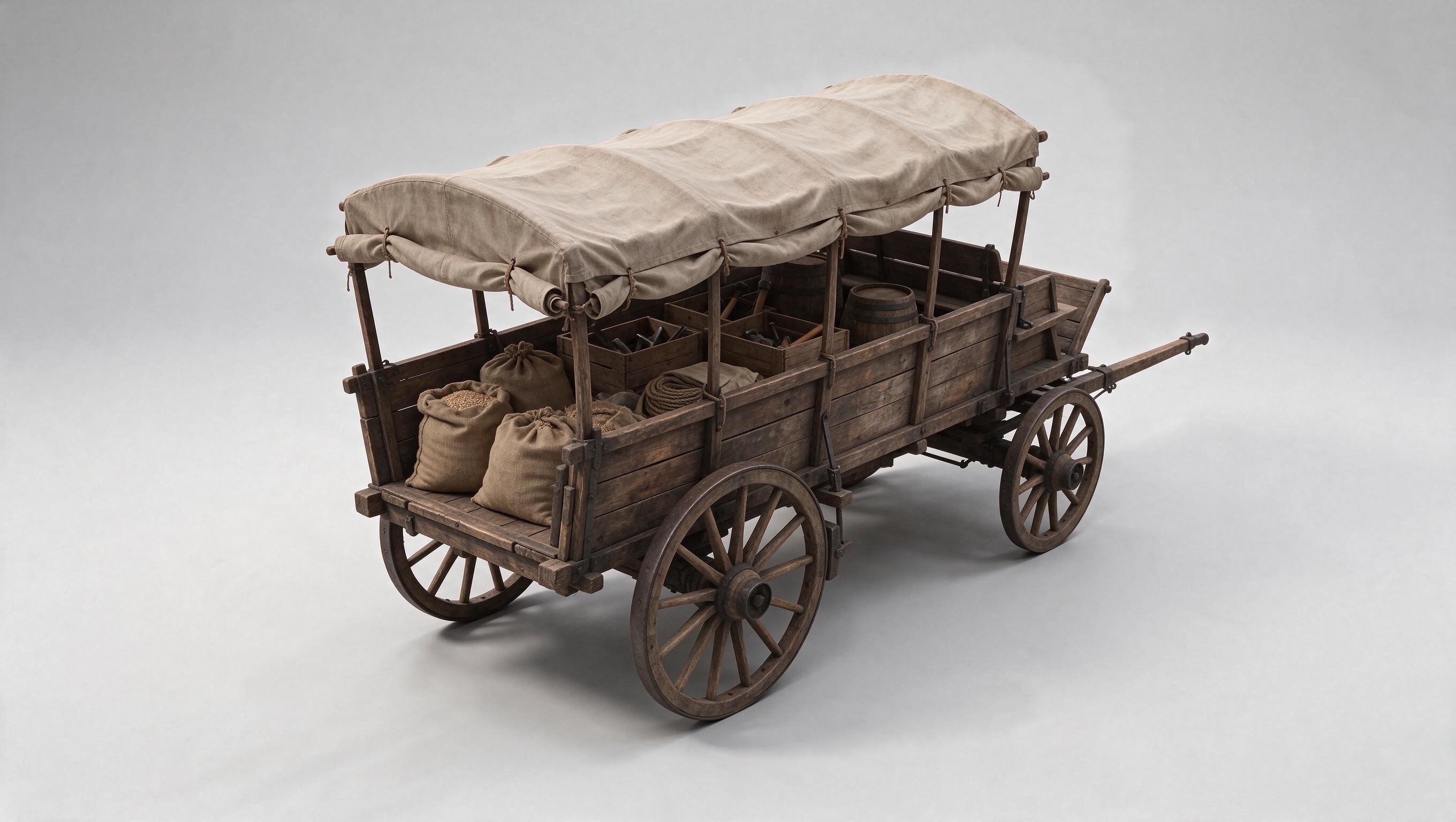
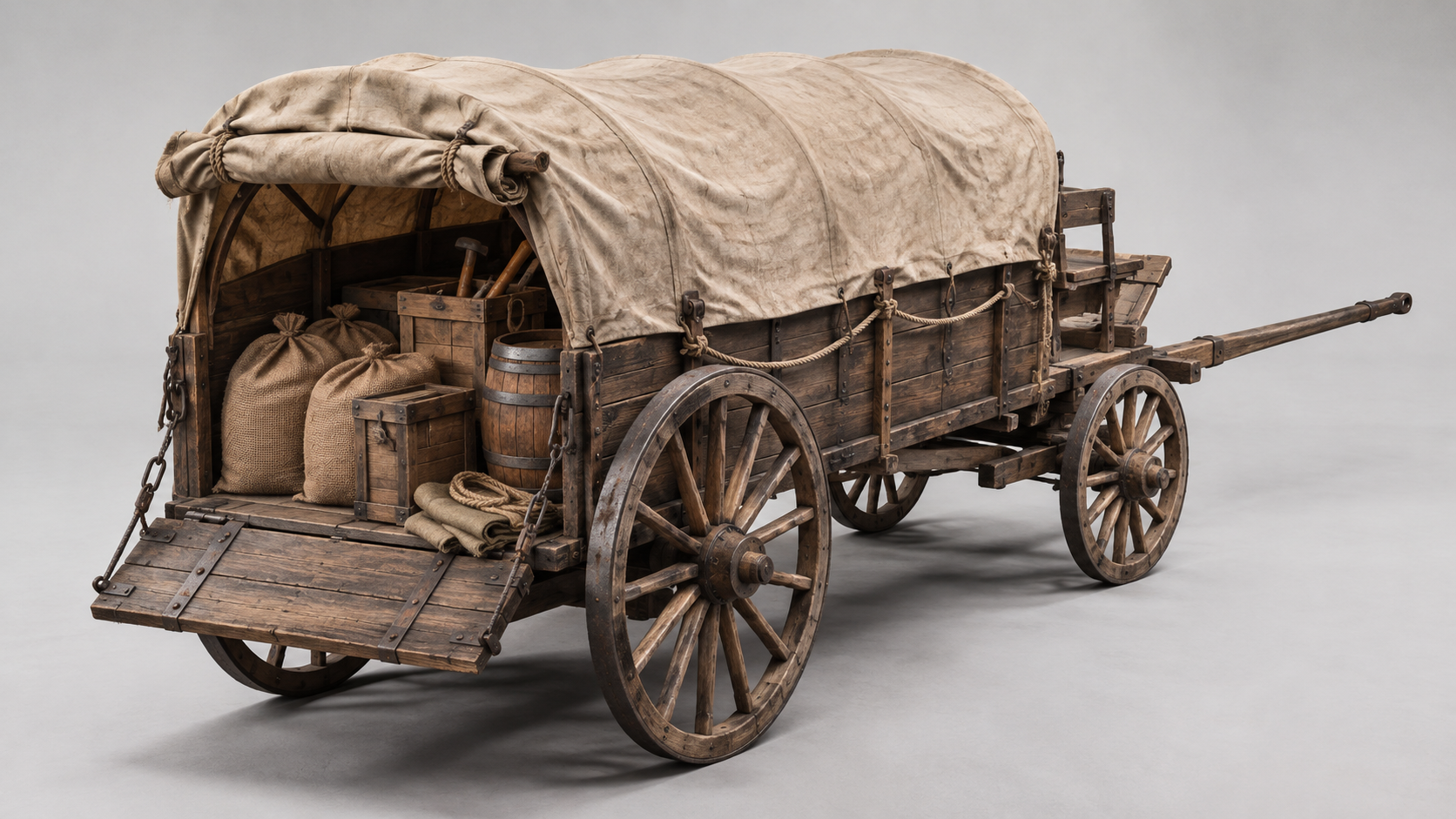
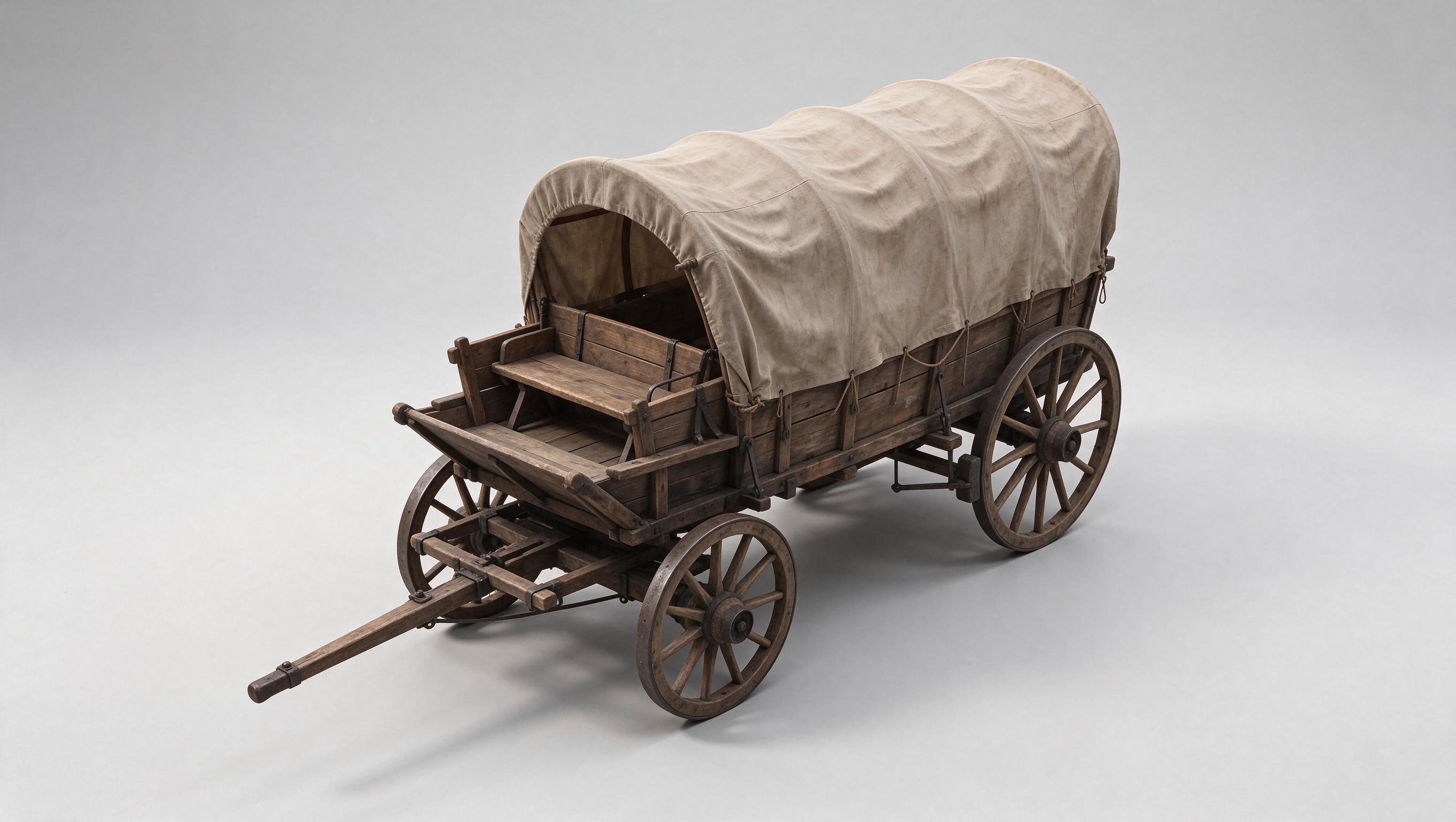
# ROAD OF WORLDS — ACT I # SECOND WAGON — MEDIEVAL SUPPLY AND CARGO WAGON ## Hollywood Cinematic Hyperrealism / Official Vehicle Reference Create ONE extraordinarily photorealistic cinematic studio photograph of a SECOND medieval covered wooden wagon designed specifically for transporting grain, tools, barrels, and essential supplies. This is the SECOND vehicle belonging to the same rural caravan as the approved covered passenger wagon in the uploaded reference image. **ABSOLUTE REQUIREMENT: CREATE ONE NEW, DISTINCT CARGO WAGON THAT BELONGS TO THE SAME CARAVAN AND SHARES THE SAME HISTORICAL DESIGN LANGUAGE, MATERIALS, AND PHOTOGRAPHIC REALISM AS REFERENCE 1.** The reference establishes the visual identity of the caravan. It does NOT mean that the second wagon must be an exact duplicate. This must look like a real full-scale vehicle constructed for a high-budget Hollywood live-action fantasy adventure film. NOT a drawing, NOT a painting, NOT a video-game asset, and NOT a decorative fantasy carriage. ## 1. REFERENCE PRIORITY — SAME CARAVAN, DIFFERENT VEHICLE Use the uploaded approved passenger wagon as the MAIN REFERENCE for: - Historical construction. - General wagon proportions. - Traditional wooden chassis. - Four-wheel arrangement. - Large rear wooden wheels. - Smaller front wooden wheels. - Iron-reinforced wheel rims. - Weathered timber materials. - Light-beige canvas canopy. - Curved wooden canopy supports. - Leather and rope fittings. - Traditional horse-drawn transport engineering. - Photorealistic surface textures. - Neutral professional studio photography. **IMPORTANT DESIGN DIFFERENCE:** The new vehicle is a dedicated freight and supply wagon, not a passenger wagon. It must look related to the first wagon but sufficiently different for a viewer to recognize it as a separate vehicle. The second wagon should have: - A slightly shorter covered body. - A somewhat lower and flatter canvas canopy. - More utilitarian wooden sidewalls. - Darker, more weathered timber. - Stronger visible cargo tie-down points. - Additional practical securing ropes. - A rear cargo opening for loading and unloading supplies. - No passenger benches inside the covered compartment. These differences must be subtle and realistic. Both wagons must look as though they were constructed in the same region, during the same historical period, by craftsmen using similar materials and techniques. Do not make the second wagon look like a completely different civilization, era, or technology. ## 2. VEHICLE TYPE AND FUNCTION A robust four-wheeled medieval rural supply wagon used for transporting agricultural goods and essential tools along mountain roads. The wagon must be mechanically functional. It should be capable of transporting: - Heavy sacks of grain. - Wooden tool crates. - Small barrels. - Agricultural equipment. - Practical travel supplies. The wagon is not luxurious. It is not a merchant's ornamental carriage. It is not a military armored vehicle. It is a hard-working, practical freight wagon designed for difficult journeys. Its appearance should communicate weight, age, durability, and long-term use. ## 3. MAIN WOODEN BODY AND CHASSIS Construct a substantial rectangular wagon body made from thick, weathered wooden planks. The sidewalls must be sturdy enough to retain heavy cargo during transport. Use: - Thick horizontal timber planks. - Reinforced wooden corner posts. - Heavy structural beams beneath the floor. - Traditional iron brackets. - Forged iron bolts and rivets. - Physically believable wooden joints. - Heavy load-bearing axles. - Functional cargo securing loops. The wagon should have slightly darker and rougher wood than the first passenger wagon. The timber must show: - Naturally irregular grain. - Knots. - Small cracks. - Scratches. - Worn corners. - Subtle dirt. - Weathering from rain and sunlight. - Signs of repeated loading and unloading. All structural components must appear physically connected. No floating planks. No impossible axle construction. No unrealistic thin wooden supports. ## 4. FOUR-WHEEL CONSTRUCTION — CRITICAL The second wagon must have EXACTLY FOUR WHEELS. **FRONT AXLE:** Two smaller wooden spoked wheels. **REAR AXLE:** Two larger wooden spoked wheels. All wheels must have: - Real wooden spokes. - Strong wooden hubs. - Realistic iron outer rims. - Worn metal fittings. - Functional axle connections. - Natural signs of long use. The front wheels must be appropriately positioned for steering. The rear wheels must support the main cargo load. The wheelbase must be consistent with the length of the wagon. All four wheels must contact the same studio floor. No extra wheels. No missing wheels. No wheels floating in the air. No rubber tires. No modern mechanical suspension. No incorrect or disconnected axles. ## 5. COVERED CANVAS CANOPY The second wagon has a traditional canvas roof similar to the first wagon. Its shape must be slightly lower and more utilitarian. **CANOPY DESIGN:** - Heavy natural linen canvas. - Light-beige or faded oatmeal coloring. - Thick practical fabric. - Several curved wooden support bows. - Naturally hanging fabric folds. - Slight unevenness in tension. - Authentic stitched seams. - Subtle dust and weather stains. - Realistic rope attachment points. The fabric must follow the physical shape of its support structure. The canopy must be securely fastened to the wooden wagon body using traditional rope ties and simple iron hooks. No modern zippers. No transparent windows. No decorative patterns. No brightly colored fabric. No magical ornamentation. The canopy must look naturally aged but intact. **IMPORTANT:** The rear canvas flap is rolled up and secured, leaving the rear cargo entrance OPEN. The open rear entrance must clearly reveal part of the supplies stored inside. The canvas must remain attached to the wagon and must not appear to float. ## 6. CARGO CONTENTS — VISIBLE AND PHYSICALLY BELIEVABLE The wagon carries grain and essential equipment for the caravan. Inside the rear cargo opening, include: **GRAIN:** Three large coarse burlap sacks containing grain. The sacks should be naturally slumped and partially compressed under their own weight. **TOOLS:** Two sturdy wooden crates containing basic agricultural and construction tools. A few wooden tool handles may be visible inside one partially open crate. **BARREL:** One small weathered wooden barrel secured toward the side of the cargo compartment. **ADDITIONAL DETAILS:** A small coil of rope and a folded piece of canvas may be placed inside the cargo area. **IMPORTANT CARGO RULES:** All cargo must remain INSIDE the wooden wagon body. The cargo must rest naturally on the floor or on other solid cargo. Heavy items must be positioned low. Do not balance large crates on the canopy. Do not attach heavy barrels to fragile decorative hooks. The grain sacks, crates, and barrel must be secured with practical ropes or wooden restraints. The wagon must look reasonably loaded, not overloaded. The cargo must be clearly recognizable without filling the entire image. No modern plastic packaging. No printed corporate labels. No firearms. No ammunition. No swords or fantasy weapons. No magical objects. No glowing materials. The cargo should visually establish that this wagon is transporting ordinary civilian supplies. ## 7. REAR LOADING AREA The rear entrance is essential to the design. It must be located at the REAR of the vehicle, opposite the horse towing assembly. The rear opening should reveal: - The wooden cargo floor. - Part of the interior sidewalls. - The underside of the canvas canopy. - The lower portions of the curved support bows. - Grain sacks. - Wooden crates. - The small barrel. A strong wooden rear tailboard may be lowered or partially opened for loading. All hinges and supporting hardware must be physically plausible. The opening must be large enough for an adult worker to load sacks and crates. No passenger benches. No beds. No seating for children inside the cargo compartment. ## 8. FRONT DRIVER'S POSITION The freight wagon has a simple wooden driver's bench positioned OUTSIDE the covered cargo compartment, at the FRONT of the vehicle. This is similar in function to the first passenger wagon's driver's position. The bench should be: - Simple. - Functional. - Constructed from aged wooden planks. - Securely attached to the wagon's front frame. - Wide enough for one adult driver. - Fitted with a practical wooden footrest. A modest backrest is acceptable. The bench must not look luxurious. It must not occupy the rear cargo entrance. **IMPORTANT:** The driver's bench is located at the FRONT, on the same end as the two smaller wheels and the towing assembly. The rear cargo opening must remain at the opposite end. Do not reverse the vehicle's front and rear. The seat must remain EMPTY. No driver, passenger, or other person should appear. ## 9. FRONT TOWING ASSEMBLY Include a traditional wooden central towing pole extending forward from the front chassis. The assembly should be suitable for a conventional two-horse draft arrangement, although NO HORSES are present in this reference image. The front towing structure must have: - A solid wooden pole. - Realistic forged iron reinforcement. - Mechanically plausible joints. - Functional attachment hardware. - A physically believable connection to the steerable front axle. The central pole must not pass through the chassis incorrectly. The front assembly must not look detached or float in space. No horses. No harnesses. No riders. No invisible reins. This image documents the vehicle alone. ## 10. HOLLYWOOD CINEMATIC HYPERREALISM **STRICT VISUAL STYLE:** Hollywood Cinematic Hyperrealism. Live-Action Feature Film. Ultra-Realistic Cinematic Photography. ARRI Alexa 35 visual characteristics. Cooke S4/i cinema lens aesthetics. Kodak Vision3-inspired organic photographic color grading. Professional film production quality. The wagon should look like a real historical vehicle physically constructed on a major film production set. Every object and material must have convincing real-world properties. **WOOD TEXTURES:** Natural grain, subtle splinters, knots, scratches, dents, age-related discoloration, and realistic roughness. **CANVAS TEXTURES:** Visible woven fibers, natural wrinkles, irregular seams, slight stains, and believable fabric thickness. **IRON TEXTURES:** Forged metal with scratches, surface oxidation, dark recesses, and restrained realistic reflections. **LEATHER TEXTURES:** Natural leather grain, creases, small cracks, wear, and authentic stitching. **ROPE TEXTURES:** Coarse natural fibers with believable thickness, tension, knots, and gravity. **BURLAP SACKS:** Rough woven fabric, realistic folds, dirt marks, and physically believable weight. **PHOTOGRAPHIC QUALITY:** Extremely detailed but natural optical clarity. Controlled highlights. Wide dynamic range. Organic contrast. Soft shadow transitions. Subtle natural film grain. No excessive HDR. No exaggerated digital sharpness. No waxy surfaces. No artificial or plastic-looking materials. No video-game aesthetic. No illustration-like textures. ## 11. CAMERA — ELEVATED REAR THREE-QUARTER VIEW Create a single clear cinematic studio photograph showing the second cargo wagon from a slightly elevated REAR THREE-QUARTER ANGLE. The camera is positioned behind the vehicle and to one side, at approximately 35–45 degrees relative to its longitudinal axis. Camera height approximately 2.5–3 meters above ground. Camera tilted gently downward approximately 15–20 degrees. **MOST IMPORTANT CAMERA GOAL:** Clearly show the OPEN REAR CARGO ENTRANCE and the supplies inside, while also showing the long wooden side of the wagon. The viewer should see: 1. The rear cargo opening. 2. The visible grain sacks and crates. 3. The light-beige canvas canopy. 4. One long wooden sidewall. 5. Both wheels on the near side. 6. The wagon's structural depth. 7. The natural construction of the chassis. The front driver's bench and towing pole should remain in their physically correct positions, even if partly obscured by the wagon body from this camera angle. Do not artificially move them into view. **NO EXAGGERATED WIDE-ANGLE PERSPECTIVE.** No fisheye distortion. No extreme top-down viewpoint. The entire wagon must remain visually understandable. ## 12. BACKGROUND AND STUDIO LIGHTING Use a clean, seamless, neutral LIGHT-GRAY STUDIO BACKGROUND. Background color: #E5E5E5. The studio floor must visually blend with the background. Lighting must be soft, professional, realistic, and neutral. - Large soft key light. - Gentle fill illumination. - Subtle separation from the background. - Natural contact shadows under all wheels. - Physically plausible material reflections. - Clear visibility of the interior cargo. No outdoor landscape. No mountains. No road. No trees. No grass. No castles. No village. No portal. No smoke. No flames. No colored magical lighting. No cinematic battle effects. This is a clean production reference, not an action scene. ## 13. IMAGE FORMAT AND COMPOSITION Create ONE SINGLE IMAGE. **HORIZONTAL 16:9 FORMAT.** Exactly ONE medieval cargo wagon. One camera angle only. Center the wagon in the composition. The entire vehicle must fit comfortably inside the frame. Leave space around: - The canopy. - The wheels. - The rear cargo opening. - The front towing pole. - The outermost structural components. Do not crop any part of the wagon. Keep all major structural elements visible. The wagon should occupy most of the image without touching the borders. No multiple views. No collage. No character sheet. No cinematic text. No technical labels. No logos. No watermarks. ## 14. IMPORTANT STORY CONTINUITY This is the supply wagon that will later be damaged during the orc attack in ROAD OF WORLDS — ACT I. However, this reference image must show the wagon BEFORE THE ATTACK. The wagon is fully functional and intact. No broken wheels. No damaged canopy. No collapsed wooden frame. No scattered cargo on the ground. No fire. No explosion. No battle damage. No debris. No blood. No orcs. No weapons. All visible wear must result only from ordinary long-term road travel. The actual destruction will be created later during video animation and cinematic editing. **THIS IS A PRE-ACTION REFERENCE PHOTOGRAPH.** ## 15. STRICT NEGATIVE REQUIREMENTS No duplication of the first passenger wagon. No dramatically different historical period. No modern cargo truck. No stagecoach. No luxury carriage. No fantasy battle wagon. No armor plating. No additional wheels. No missing wheels. No modern rubber tires. No incorrect axle placement. No floating parts. No oversized cargo. No passengers. No driver. No children. No horses. No other animals. No battlefield. No combat. No destruction. No broken body panels. No magical ornaments. No decorative banners. No unrelated props. No cartoon. No anime. No illustration. No concept painting. No CGI toy aesthetic. No Unreal Engine appearance. No overly smooth surfaces. No impossible mechanical construction. No text or captions. ## FINAL QUALITY CONTROL Before finalizing the image, verify: 1. EXACTLY ONE CARGO WAGON is present. 2. It belongs visually to the SAME CARAVAN as Reference 1. 3. It is clearly a DIFFERENT VEHICLE from the first passenger wagon. 4. It has EXACTLY FOUR functional wooden spoked wheels. 5. The rear wheels are larger than the front wheels. 6. It has a realistic low-profile beige canvas canopy. 7. The REAR cargo entrance is open and correctly oriented. 8. Grain sacks, wooden crates, and one barrel are visible INSIDE. 9. The front driver's bench remains outside the canopy. 10. The central front towing assembly is mechanically plausible. 11. Every major part is physically connected. 12. No people, children, or horses appear. 13. The vehicle is completely intact, before the orc attack. 14. The image has a clean, neutral light-gray studio background. 15. The visual quality matches a genuine Hollywood live-action production photograph. **FINAL PRIORITY ORDER:** 1. SAME HISTORICAL AND VISUAL LANGUAGE AS THE APPROVED FIRST WAGON. 2. DISTINCT FREIGHT-WAGON DESIGN. 3. PHYSICALLY REALISTIC FOUR-WHEEL CONSTRUCTION. 4. VISIBLE REAR CARGO OPENING WITH GRAIN AND TOOLS. 5. CORRECT FRONT DRIVER'S POSITION AND TOWING ASSEMBLY. 6. HOLLYWOOD CINEMATIC PHOTOGRAPHIC REALISM. 7. CLEAN NEUTRAL STUDIO BACKGROUND. 8. COMPLETE, UNCROPPED WAGON. 9. ABSOLUTELY NO BATTLE DAMAGE. **THE FINAL RESULT MUST LOOK LIKE A REAL, FUNCTIONAL, WEATHERED MEDIEVAL SUPPLY WAGON, PHOTOGRAPHED ON A PROFESSIONAL HOLLYWOOD FILM PRODUCTION STAGE BEFORE THE EVENTS OF THE ORC ATTACK.** Accuracy, historical plausibility, practical construction, and photographic realism are more important than decorative creativity.

Free to start · Generate videos and images with AI in seconds
More from this creator

More Seedream 5.5 images
См. все →